




Sotto gli alberi di gelso / Under the Mulberry Trees (2025)
represents a visual exploration of one of the most notable and densely populated neighborhoods within the historic center of Naples: Montecalvario.
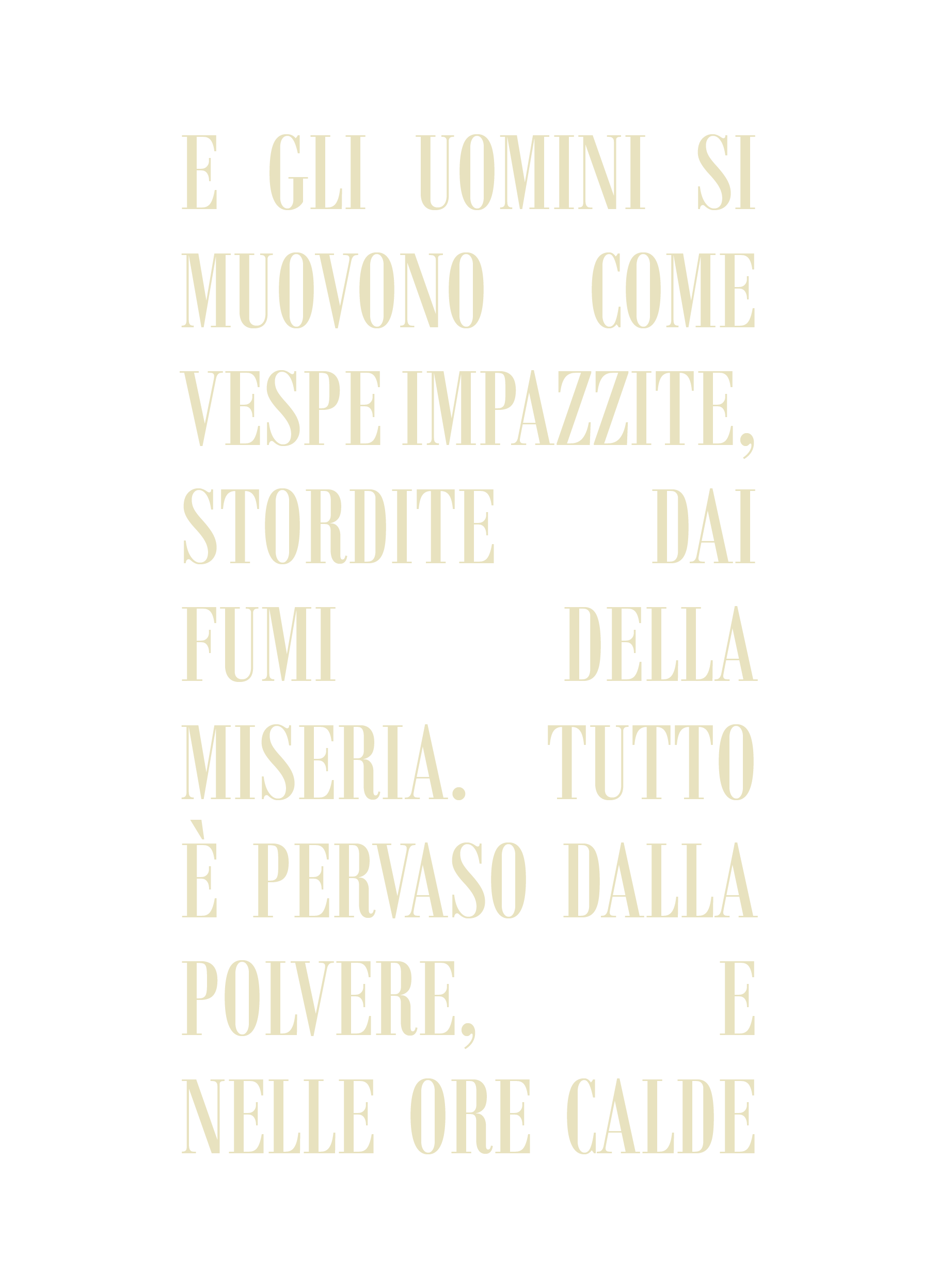
The imagery elucidates an existential space that emerges amidst the interstitial realities of daily life, juxtaposing folkloric displays with the socio-economic marginalization experienced by the local residents. The historical narrative of this locale is marked by centuries of social evolution: transitioning from a military district to an area plagued by high crime rates, and now evolving into a tourist destination of international acclaim. The inhabitants of Montecalvario embody, as articulated by scholars Walter Benjamin and Asja Lacis, the "porous" nature of tuff, the predominant building material utilized throughout much of the city center. This inherent quality allows the material to absorb liquids without compromising its structural integrity, symbolizing a capacity to assimilate external phenomena while maintaining an unwavering identity. The city retains its authentically communal essence, adeptly navigating various social, cultural, and urban interstices to absorb the impacts of capitalism without sacrificing its core identity. Sotto gli alberi di gelso / Under the Mulberry Trees delineates a space for contemplation, observation, and a deliberate pace; a realm wherein one can inhale the moments of stillness and respite, presenting a facet of reality stripped of exoticism, voyeurism, and sensational narratives. The treetops of the historical mulberry trees, which once blanketed the area providing sustenance for silkworms, served as a natural barrier against prying eyes; they symbolize a sanctuary for those preferring anonymity. In this context, I envision a parallel present that coexists alongside the represented city; a stretched and muted temporal experience where shadows emanate coldness, and poverty is intertwined with the distinct aromas of coffee and bleach—where the faces bear ancient weariness and the rhythms of existence navigate both adjacency to and divergence from modernity, concealing and surviving within the urban tapestry.
Exhibitions / Awards
- Shortlisted in Kolga Tbilisi Photo 2026 for Documentary series
- Shortlisted in FOTOFABRICA PRIZE 2026 and exhibited in 10ª edizione del Festival Diecixdieci
- Mention Honorable in Black and White International Photography Awards 2026 in Experimentation category
- Longlisted 35/50 in BBA Photography Prize 2026
- Shortlisted in Photometria Photobook Award 2026